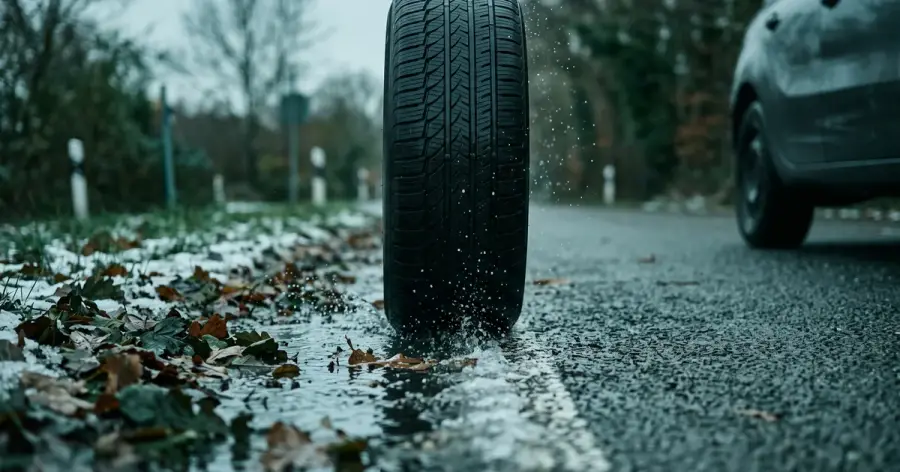
The tread is what connects your car to the road. It channels water away, grips snow and keeps braking distances short. It gets shallower with every kilometre – and at some point, too shallow.
What the law requires
In Germany, cars must have a minimum tread depth of 1.6 mm. Below that, both the driver and the vehicle owner risk a fine and a penalty point.
What's recommended
You're safer with considerably more:
| Tyre | Legal minimum | Recommendation |
|---|---|---|
| Summer tyres | 1.6 mm | at least 3 mm |
| Winter tyres | 1.6 mm | at least 4 mm |
| All-season tyres | 1.6 mm | at least 4 mm |
Below these values, the risk of aquaplaning rises sharply and braking distances on wet or snowy roads become noticeably longer.
The euro coin test
Put a 1-euro coin into the main groove of the tread. If the gold rim disappears completely, you still have about 3 mm or more. If the rim is clearly visible, it's time for new tyres.
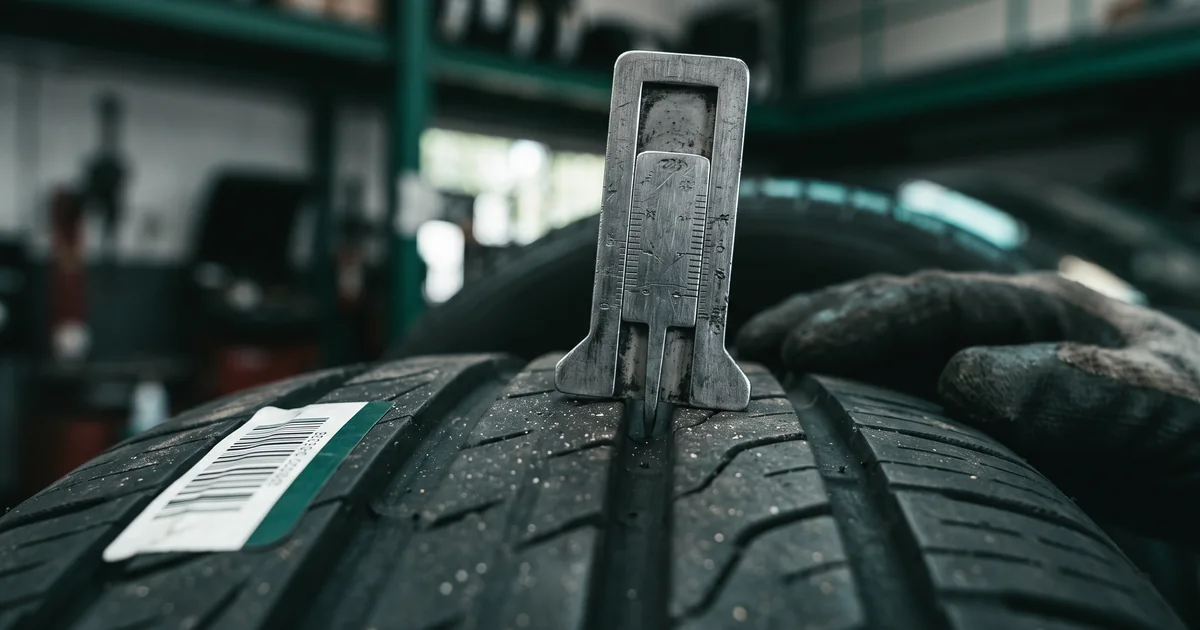
All tyres also have small bars in the grooves, the tread wear indicators (TWI). When they're level with the tread surface, the legal limit of 1.6 mm has been reached.
Measure at several points and on all four tyres. Uneven wear can indicate incorrect pressure or wheel misalignment.
We measure too
Every time we change your tyres, we check the tread and tell you honestly whether your tyres will last another season.
Rein Reifen GmbH · Mönchengladbach